
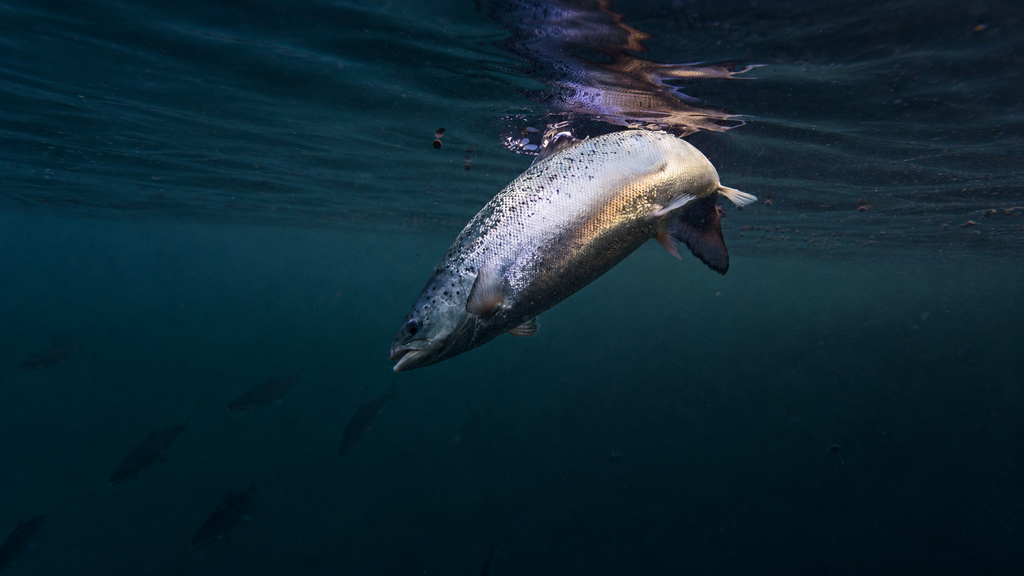
Salmon is often seen as a healthy seafood choice, but there is an important sustainability question behind its production: what are farmed salmon fed? Conventional salmon diets have historically used fishmeal and fish oil made from wild-caught forage fish. This creates pressure to find feed ingredients that can help reduce dependence on marine resources.
Black soldier fly larvae (BSFL) meal is one alternative being explored by the aquaculture industry. Produced from insect larvae, it can offer a protein ingredient for selected feed formulations and may help support a more circular approach to aquafeed production.
At Jital Solutions, we work with feed producers exploring BSFL meal as a potential ingredient in more resource-conscious aquafeed formulations. Here is how it may contribute to salmon-feed sustainability, alongside the nutritional and sourcing considerations that feed mills need to assess.
The Environmental Challenge of Fishmeal-Based Salmon Feed
Fishmeal used in salmon diets is commonly produced from small marine fish, including species such as anchovies and sardines. These forage fish play important roles in marine food webs. When they are harvested for feed, the wider environmental implications depend on factors such as fishery management, stock status, sourcing practices and the amount used.
This is one reason salmon producers and feed formulators are investigating alternative proteins. The goal is not necessarily to remove fishmeal entirely, but to diversify feed ingredients and reduce reliance on wild-caught marine resources where practical.
How BSFL Meal May Improve Salmon-Feed Sustainability
1. Supports a Circular-Economy Approach
Black soldier fly larvae can be reared on suitable organic side-streams and certain agricultural or food-processing by-products, subject to local regulations and feed-safety requirements. The larvae convert eligible materials into biomass that can be processed into an ingredient such as BSFL meal.
This approach can create value from selected residual materials. Its environmental benefit depends on the substrates used, production methods, energy requirements and how the system is managed. Responsible sourcing and traceability are therefore essential.
2. May Help Reduce Greenhouse-Gas Emissions
The carbon footprint of a feed ingredient depends on its full life cycle, including raw materials, energy use, processing, transport and allocation methods. Some life-cycle assessment studies of insect production report promising results, but outcomes vary significantly between production systems and comparison ingredients.
For salmon-feed producers, the most reliable approach is to compare relevant, transparent life-cycle assessment (LCA) data rather than assume that every insect ingredient automatically has a lower footprint. Supplier-specific data can help buyers evaluate the potential contribution of BSFL meal to their sustainability targets.
3. Offers Another Option for Resource-Efficient Protein
BSFL production can use relatively compact facilities and may be located independently of arable farmland or coastal fisheries. However, land and water impacts depend on the production system, substrate, climate control, energy source and processing method.
Feed mills should therefore compare BSFL meal with other protein options using consistent boundaries and data for land use, water use, energy and emissions.
4. Can Help Diversify Protein Sources and Reduce Reliance on Wild Fish
When BSFL meal replaces a portion of fishmeal in a suitable formulation, it can reduce the amount of fishmeal required for that diet. The actual reduction in wild-fish demand depends on the inclusion rate, the ingredient being displaced and the origin of the fishmeal being replaced.
This makes BSFL meal a potential part of a broader strategy to diversify aquafeed ingredients. It should be assessed alongside responsible fishery sourcing, nutritional performance and the overall environmental profile of the finished feed.
What About Nutritional Performance?
Environmental benefits matter only when the feed also meets the nutritional needs of the fish. BSFL meal contains protein and amino acids, including lysine and methionine, but its nutrient profile can vary with larval substrate, processing method and product specification.
It should therefore be evaluated as part of a balanced formulation rather than treated as a one-to-one replacement for fishmeal in every diet. One important consideration is the long-chain omega-3 fatty acids EPA and DHA. Depending on the formulation and the composition of the BSFL ingredient, feed producers may need to use an appropriate supplementary source, such as algal oil, to meet the diet’s nutritional targets.
Digestibility, palatability, inclusion level, fish health and growth performance should be validated for the relevant salmon species and life stage through formulation work and feeding trials.
ESG, Traceability and Certification: What Buyers Should Check
Sustainability claims are strongest when they are supported by clear documentation. Feed mills and procurement teams assessing an insect-based ingredient can request:
- Product specifications and batch-level quality documentation.
- Traceability information for the raw materials or substrates used in BSFL production.
- Relevant sustainability certifications and evidence of regulatory compliance.
- Life-cycle assessment data covering greenhouse-gas emissions and, where available, land and water impacts.
- Information showing how the ingredient fits the buyer’s applicable certification and feed-sourcing requirements, including ASC-related requirements where relevant.
Certification requirements differ by programme and supply chain. Buyers should confirm the current requirements with the relevant certification body and avoid assuming that a particular ingredient automatically qualifies a finished feed or farm for certification.
Why Salmon-Producing Regions Such as Norway Are Watching Alternative Proteins
Norway is a major salmon-producing country, and its aquaculture sector operates under substantial commercial and sustainability scrutiny. As feed represents a significant part of farmed salmon production, alternative protein ingredients are of interest to producers seeking to diversify sourcing and manage environmental impacts.
BSFL meal is one of several ingredients being explored. Commercial adoption depends on factors such as regulatory approval, nutritional performance, price, reliable supply, product consistency and evidence that supports sustainability claims.
Practical Considerations for Salmon Feed Mills
Before incorporating BSFL meal into a salmon-feed formulation, feed mills should assess the ingredient’s technical fit and commercial reliability. Key considerations include:
- Formulation and inclusion rate: confirm the appropriate level for the species, life stage and complete diet.
- Omega-3 balance: check EPA and DHA requirements and determine whether a complementary lipid source is needed.
- Batch consistency: review specifications, analytical results and quality-control processes.
- Supply reliability: confirm production capacity, lead times and continuity of supply at commercial scale.
- Cost and performance: compare total formulation cost alongside nutritional outcomes, ingredient variability and supply risks.
A structured evaluation helps producers judge whether BSFL meal is suitable for their formulation rather than relying on sustainability claims alone.
Frequently Asked Questions
Is insect protein better for the environment than fishmeal?
It can offer environmental advantages in some production systems, including the potential to reduce reliance on wild-caught fish. However, results depend on the insect-production system, substrate, energy use and the fishmeal source being compared. Relevant LCA data is the best basis for a fair comparison.
Why are salmon-feed producers exploring insect-based ingredients?
Insect-based ingredients can diversify protein sourcing and may help reduce the amount of fishmeal used in a formulation. Adoption depends on nutritional suitability, regulations, cost, supply consistency and documented environmental performance.
Can BSFL meal reduce the carbon footprint of salmon feed?
Potentially, but the result is not guaranteed. The overall impact depends on how the BSFL meal is produced and processed, what ingredient it replaces and the boundaries used in the LCA. Buyers should request comparable, product-specific data.
Can BSFL meal completely replace fishmeal in salmon diets?
Not as a universal recommendation. BSFL meal has a different nutrient profile from fishmeal, and suitability depends on formulation, inclusion level, fish life stage and trial results. It is best evaluated as part of a balanced diet.
What should buyers request from a BSFL meal supplier?
Ask for a current product specification, batch-level quality documentation, traceability information, relevant certifications and available LCA data. Feed mills should also confirm supply capacity and the ingredient’s suitability for their formulation and regulatory market.
Explore BSFL Meal for Aquafeed Formulations
Jital Solutions supplies black soldier fly larvae (BSFL) meal for feed producers evaluating alternative protein ingredients for aquafeed. If your team is assessing ways to diversify protein sourcing, request product specifications, quality documentation and available sustainability data to support your formulation review.
Contact Jital Solutions to discuss BSFL meal requirements for your aquafeed programme.